- Home
- Gluten Free Cooking
- Homemade Gluten-Free Sauces
- How to Make Pan Sauce
How to Make a Pan Sauce (Easy Restaurant-Quality Sauce in 5 Minutes)
If you're like me, you want your meals to be delicious and uncomplicated. You also like simple tricks that elevate the look and flavor of your dishes.
Learning how to make a pan sauce is one of those tricks. You'll improve the taste of your pan-fried meats with a restaurant-style sauce that's ready in five minutes.
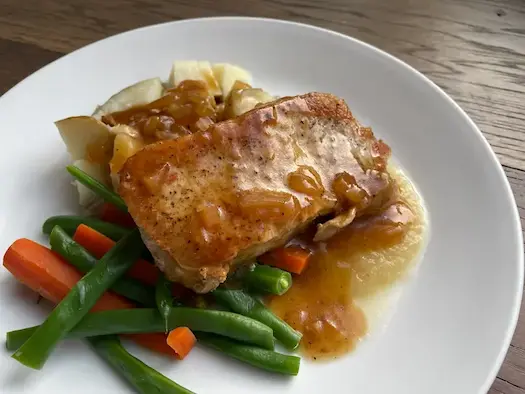
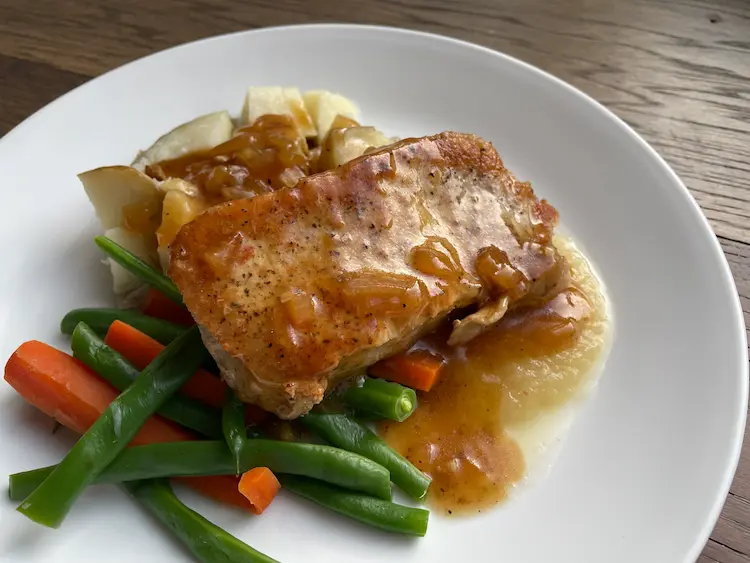
You don’t need an expensive bottled sauce with ingredients you don’t understand, and you certainly don’t need a culinary degree. All you need is this easy formula and a few simple ingredients from your pantry.
And if, like me, you’re concerned about gluten, it’s naturally gluten-free so long as you choose gluten-free broth and seasonings.
 |
Want simple guidance, trusted resources, and doable recipes delivered to your inbox once a week? |
|
On This Page:
How to Make a Pan Sauce – The Master Formula
Step-by-Step: How to Make a Pan Sauce
The Best Liquids for Pan Sauce and How Much to Use
How to Pair a Pan Sauce with Different Proteins
Pan Sauce vs Pan Gravy: What’s the Difference?
What Is a Pan Sauce?
A pan sauce is simply a sauce made from what’s left in the pan after cooking meat, poultry, or fish.
It sounds impressive doesn't it? When you see it on a restaurant menu, you might think it's difficult to make, but it's not.
Once you understand the formula, you’ll use it over and over. It will elevate your cooking while saving you time and money.
How to Make a Pan Sauce – The Master Formula
Fat + Fond + Aromatics + Liquid + Reduction + Butter = Pan Sauce
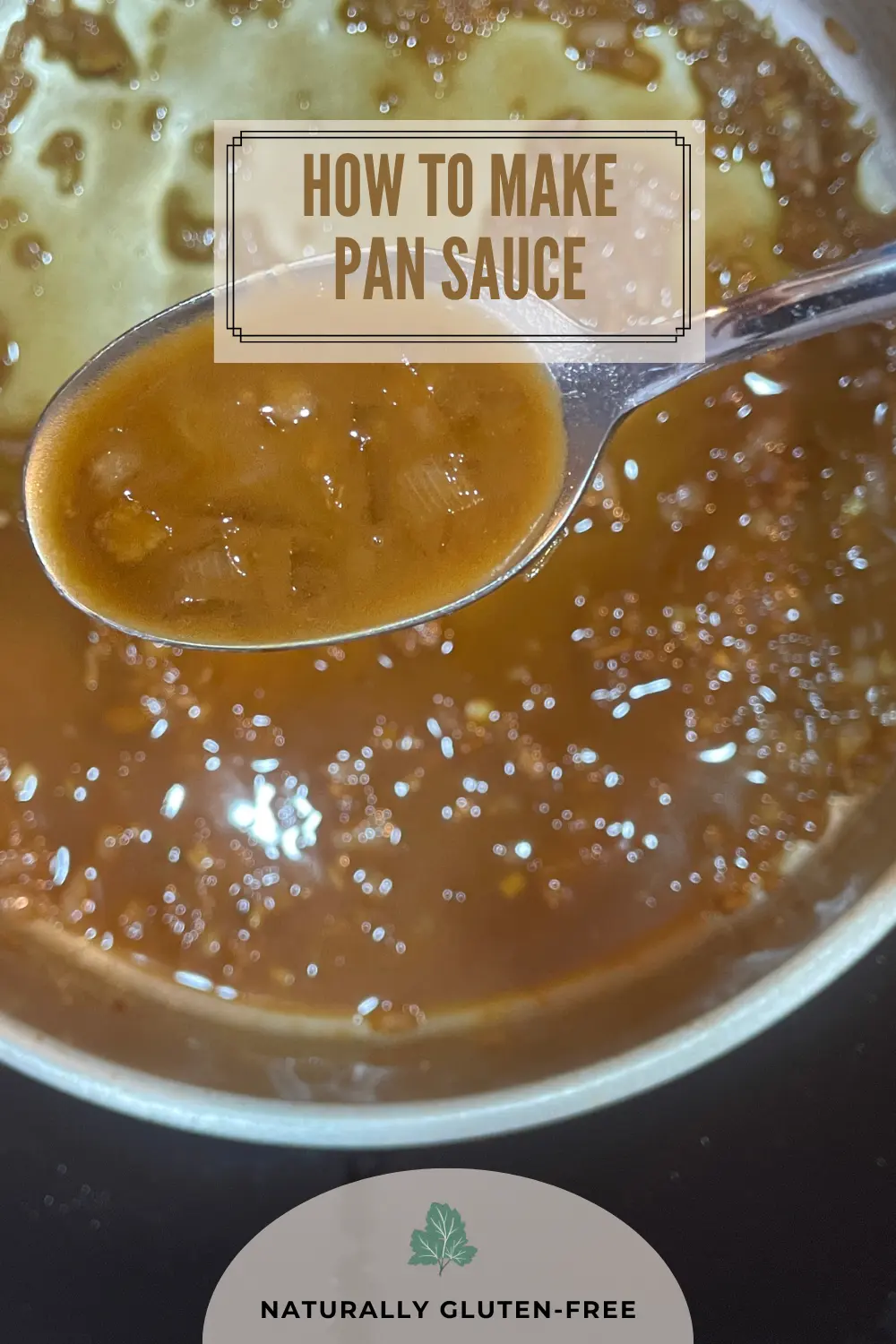
- Fat = the cooking fat and any fat rendered from the meat
- Fond = the browned bits stuck to the pan
- Aromatics = shallots, onions, or garlic
- Liquid = wine, broth, water or another liquid
- Reduction = simmering to concentrate flavor
- Butter – adds richness, flavor, and texture to the sauce
To make a quick pan sauce, remove your cooked meat from the pan, pour off excess fat, then add a little wine, broth, or even water to the hot pan and scrape up the browned bits. Let it simmer briefly, then stir in a small knob of cold butter or a splash of cream for richness. Season with salt, pepper, and optional herbs or mustard to taste.
That’s it! And this one formula works the same whether you’re cooking a chicken breast, steak, pork chops, sausage, lamb chops or fish.
Step-by-Step: How to Make a Pan Sauce
Let’s break it down a little further so you can visualize the steps and understand how it works. Then we’ll discuss a few variations.
What You Need
- A skillet with browned drippings (not burned) from cooking your protein.
- Aromatics – finely diced shallots, onion or garlic are optional but really boost the flavor.
- A liquid – wine, broth or a combination are most common, but you can use beer, cider, juice or even water. Lemon juice or a splash of cider vinegar can brighten the flavor especially if you’re not using wine.
- A knob of cold butter, about the size of a walnut, will thicken the sauce slightly and add a silky texture.
- Fresh or dried herbs are also optional.
Best Pan for Pan Sauce
- Stainless steel and cast iron are excellent. They both can be heated to a high temperature and heat evenly. This is ideal for pan-frying meat.
- Non-stick is less ideal because it can’t be heated as high, and the meat will create less fond
Step-by-Step Guide
 |
 |
 |
 |
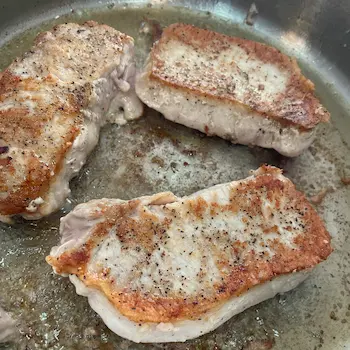
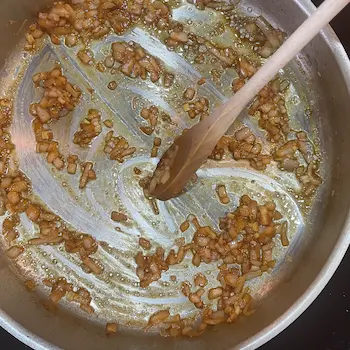
- Pan-fry your protein and remove it to a plate to rest. Pour off excess fat and leave the browned bits in the bottom of the pan.
- Add your aromatics – Two finely diced shallots (or half a small onion) and one or two cloves of minced garlic. Stir for 60 to 90 seconds. This step is optional.
- Deglaze the pan – Add a splash of liquid, a few tablespoons of wine will work perfectly, and as it boils, stir up the bits from the bottom of the pan. Add the rest of your liquid.
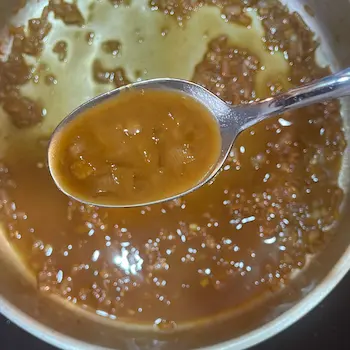
- Reduce the liquid – Simmer on low heat until you have about half the amount of liquid in the pan.
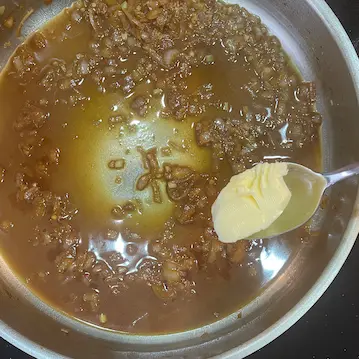
- Finish with butter – Remove your pan from the heat and add a piece of cold butter about the size of a walnut. Swirl it around in the sauce until it melts and the sauce becomes slightly thick and shiny.
- Taste and adjust – Add salt and pepper if necessary. There may have been enough in the pan from the meat. If your sauce tastes flat, add a little lemon juice or apple cider vinegar. If you’re using herbs, add them now.
- Serve immediately, spooned over your protein.
How to Pan-Fry a Steak (Pan-Seared Method for a Perfect Crust)
Want to See This Technique in Action?
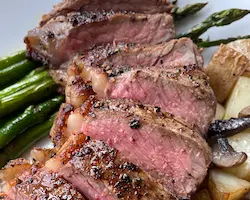
One of the easiest ways to use a pan sauce is with a perfectly cooked steak. Learn how to build a beautiful crust and finish with a simple restaurant-style sauce.
The Best Liquids for Pan Sauce and How Much to Use
A traditional pan sauce is made with wine and broth.
Use red wine for beef and white wine for chicken, pork or fish. Two or three tablespoons is all you need to deglaze the pan. Then add a good quality beef or chicken broth. I recommend a low sodium broth so you can control the seasoning. Make sure it’s gluten-free if that matters to you.
If you’d like to make your own broth, here is my Homemade Gluten-Free Beef Bone Broth Recipe.
How to Make a Pan Sauce Without Wine
Wine adds a nice acidic snap to your pan sauce, but if you don’t like wine or you don’t drink alcohol you can make a beautiful bright sauce without it. Make your pan sauce as usual but use the broth to deglaze the pan. Then add a splash of lemon juice or apple cider vinegar to brighten up the flavor. Lemon juice works well with fish or chicken. Pork and lamb pair nicely with apple cider vinegar.
Caution: go easy on the lemon or vinegar, then taste your sauce. You can always add more, but if you add too much it’s harder to fix.
Alternative Liquids You Can Try
Once you get comfortable with the technique, you may want to change things up a bit. Here are a few ideas:
Fruit juices like apple, white grape, orange or cranberry are mildly acidic and pair nicely with pork or chicken. You can use them with broth or on their own.
Beef and lamb need more robust flavors for balance. Experiment with red grape juice, prune juice, coffee, or a stout beer like Guinness – if you’re gluten-free choose a gluten-free beer.
How Much Liquid to Use
Pan sauce is meant to be a couple of tablespoons of big flavor per piece of meat. So, how much you make depends on how much meat you’re cooking.
For two steaks, chops, breasts or filets, you’ll need 2 or 3 tablespoons of wine to deglaze the pan and ½ cup of broth.
You’ll simmer and reduce it to about half the original amount – this will give you ¼ cup of sauce to spoon over your protein. More meat? Increase proportionally.
How to Pair a Pan Sauce with Different Proteins
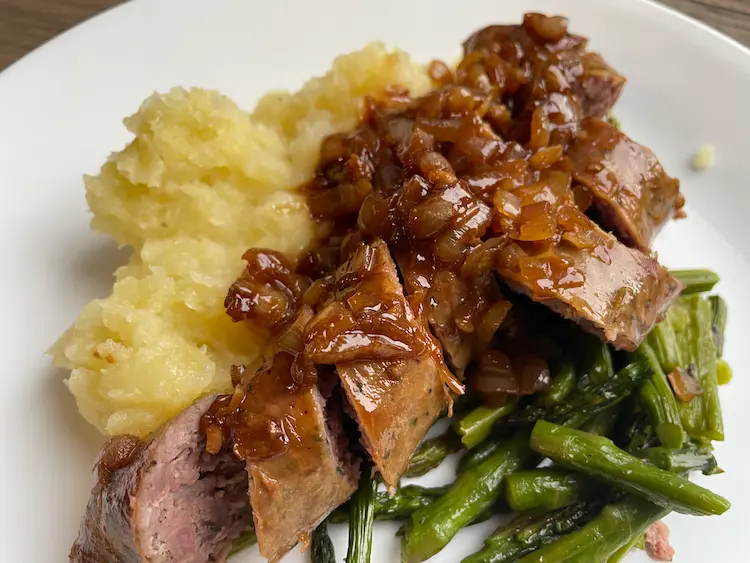
Here are some traditional pairings. This is meant as a guide only. If you have favorite flavor combinations, I encourage you to experiment.
|
Protein |
Good Liquids |
Aromatics |
Finish |
|
Steak |
Red wine + beef broth |
Mushrooms, onion |
Butter |
|
Chicken |
White wine + chicken broth |
Shallots, thyme |
Butter or cream |
|
Pork |
Apple cider vinegar + chicken broth |
Garlic, rosemary |
Butter |
|
Fish |
Lemon juice + chicken broth |
Shallots, dill |
Butter |
How to Pair a Pan Sauce with Different Proteins
Here are some traditional pairings. This is meant as a guide only. If you have favorite flavor combinations, I encourage you to experiment.
Steak
Good liquids: Red wine + beef broth
Aromatics: Mushrooms, onion
Finish: Butter
Chicken
Good liquids: White wine + chicken broth
Aromatics: Shallots, thyme
Finish: Butter or cream
Pork
Good liquids: Apple cider vinegar + chicken broth
Aromatics: Garlic, rosemary
Finish: Butter
Fish
Good liquids: Lemon juice + chicken broth
Aromatics: Shallots, dill
Finish: Butter
Pan Sauce vs Pan Gravy: What’s the Difference?
The terms pan sauce and gravy are often used interchangeably. So, you may be wondering if they are the same thing, and if not, what’s the difference.
A pan sauce, like the one we’re making here, is quite thin and usually finished with butter or a little heavy cream.
Pan gravy is made the same way – deglaze the pan, add aromatics, add broth – but instead of finishing with butter, thicken your sauce with a little cornstarch and water. Now you have a pan gravy.
If you’d like to learn more about building sauces from scratch, visit my Complete Guide to Homemade Gluten-Free Sauces.
Common Problems and How to Fix Them
Sauce is Too Thin
A pan sauce is fairly thin, but if it needs a little more body, reduce it more by continuing to simmer, or swirl in a bit more butter.
Sauce is Too Thick
This can easily happen if you reduce your sauce too far. Just add a little more broth.
Sauce is Bitter
You’ve likely burned your fond. If it is deep brown, it will give you a beautiful, robust flavor. If it is burned, it will impart a bitter flavor. Unfortunately, there is no fix for this. You can clean out your pan and make a quick sauce by sautéing your aromatics in butter then adding broth and a squeeze of lemon juice.
Sauce is Too Salty
Taste your sauce before adding salt. There may be enough in the pan from cooking your meat. If your sauce is too salty, a squeeze of lemon juice can mask the saltiness. You can also try adding a bit of unsalted broth or butter. If it’s still too salty you may need to thin it out with unsalted broth, then thicken it with cornstarch and water to make a pan gravy.
Sauce is Too Acidic
If your pan sauce is too acidic, add a little more broth or butter. If that doesn’t work, you may need to thin it out with unsalted broth then thicken it with cornstarch and water to make a pan gravy.
Sauce Broke or Looks Greasy
This means the butter wasn’t cold or it was added when the pan was too hot. Remove the pan from heat, let it cool for 30 seconds, then whisk in a small splash of cold water or broth while swirling the pan.
There is Almost No Fond in the Pan
If you have no fond to work with, it means your meat did not brown. This is usually the result of moisture on the meat, a pan that is too cool or an overcrowded pan. You may be able to rescue it by removing the meat, drying it and the pan thoroughly and starting over. Be careful not to overcook your protein. Next time, use a hotter pan, dry the meat thoroughly and leave room between the pieces. Work in batches if necessary.
Want to learn how to cook any piece of meat to delicious, gluten-free perfection?
My Complete Guide to Gluten-Free Meat Cooking can show you how.
Frequently Asked Questions
What Is Fond?
What Is Fond?
Fond is the brown bits left in the bottom of the pan after you pan-fry meat, poultry or fish. It is beautifully flavorful and makes a great base for pan sauce or gravy.
Can I make a pan sauce without wine?
Can I make a pan sauce without wine?
Yes. Broth alone works well. Add a splash of lemon juice or apple cider vinegar to brighten the sauce.
Can I make a pan sauce without butter?
Can I make a pan sauce without butter?
Yes. You can finish the sauce with a drizzle of good olive oil instead, though it won't have quite the same glossy texture. For a dairy-free option, a good-quality dairy-free butter works well too.
Can I make pan sauce for chicken?
Can I make pan sauce for chicken?
Yes. After pan-frying chicken breasts or thighs, use the browned bits and drippings left in the skillet to make a quick pan sauce. Chicken pairs especially well with shallots, garlic, lemon juice, white wine, and fresh herbs.
What is the best pan for making pan sauce?
What is the best pan for making pan sauce?
Cast iron and stainless-steel work best. They heat evenly and to high enough temperature to produce great fond. Non-stick pans often don’t produce enough fond.
Can I make pan sauce ahead of time?
Can I make pan sauce ahead of time?
Pan sauce is best made fresh and served immediately. It can be made ahead and reheated gently, but it may need a splash of broth and a fresh knob of butter to bring it back to life.
Is pan sauce gluten-free?
Is pan sauce gluten-free?
Yes, as long as your broth and seasonings are gluten-free.
Can I use water instead of broth?
Can I use water instead of broth?
Yes. Broth adds more flavor, but water will still dissolve the fond and create a simple pan sauce. If you use water, add a little extra seasoning, lemon juice, or butter to boost the flavor.
What meats work best for pan sauce?
What meats work best for pan sauce?
Almost any meat works — chicken breasts, pork chops, steak, duck breast, lamb chops, even firm fish, like salmon. The key is that the meat needs to be a tender cut that can be pan fried.
Final Thought
Have I convinced you to ditch the bottled sauces and gravy mixes?
You have so much flavor sitting in the bottom of your pan it would be a shame to waste it. And the best part about making your own pan sauce is that you control the ingredients. It’s all simple, real food, it’s naturally gluten-free and you don’t even need a recipe. Just this simple, repeatable formula and a few ingredients you likely have in your pantry.
Bon appétit!
|
|
Want simple guidance, trusted resources, and doable recipes delivered to your inbox once a week? |
|

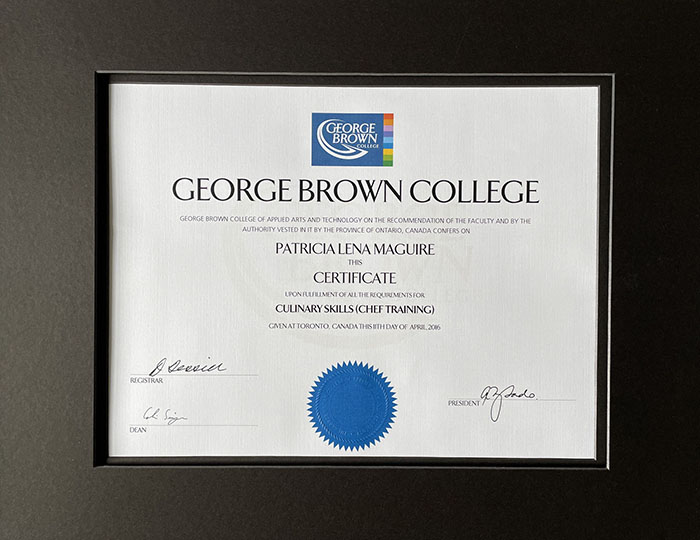
Patty Maguire is a George Brown College culinary graduate whose training focused on nutrition and cooking for special diets.
Since her celiac diagnosis in 2012, she has shared a practical, whole-food approach to naturally gluten-free living that helps readers cook with confidence, eat out safely, travel well, and live fully.
Rooted in farm-family values and simple home cooking, her work has been recognised by Feedspot’s top 10 Canadian gluten-free blogs list.
You might like these
Gluten-Free Salad Dressing: Easy Formula + 5 Simple Recipes
Learn a simple formula for gluten-free salad dressing plus easy recipes you can make in minutes. No bottles needed—just fresh, safe ingredients.
Gluten Free Meal Planning
meal planning and shopping list for a typical gluten free week
Perfect Poached Eggs
Protein is an essential part of a gluten free breakfast and these perfect poached eggs can be the quick easy centerpiece


Hi, I'm Patty.
I'm a person with celiac disease, a culinary school grad, and a lifelong student of food and natural healing.
After my diagnosis in 2012, I enrolled in the Chef’s School at George Brown College and earned my Culinary Skills diploma, focusing on nutrition and cooking for special diets.
Cooking has changed my life — and helped me take back my health. Now, I’m here to help you do the same.
Let’s do this together!

Subscribe!
Get Naturally Gluten-Free Digest
Practical gluten-free tips + a featured recipe/article
delivered to your inbox.
Recent Articles


-
How to Prep Ahead, Store and Reheat Gluten-Free Sheet Pan Dinners
Aug 07, 26 01:48 PM
 Learn how to prep gluten-free sheet pan dinners ahead, store leftovers safely and reheat them without drying out. Includes practical tips and a printable guide.
 -
Sheet Pan Cooking Made Easy: Get Everything to Finish at the Same Time
Jul 22, 26 04:14 PM
 Learn how to stagger sheet pan ingredients so everything finishes together. A simple method using timing windows—not complicated minute-by-minute schedules.
 -
Sheet Pan Cook Time Chart for Proteins and Vegetables
Jul 22, 26 04:13 PM
 Compare sheet pan cook times for proteins and vegetables, timing windows and safe internal temperatures. Includes a printable cook time chart.


Popular Articles


Trained in Culinary Skills with a focus on Nutrition and Healthy Eating!
Visit NGF (NaturallyGluten-Free) on Facebook at: https://www.facebook.com/naturallyglutenfree
On Substack at: Naturally Gluten-Free Digest
Patricia Maguire, copyright © 2026 naturallygluten-free.com Port Hope, Ontario, Canada. All rights reserved
Subscribe to
Naturally Gluten-Free Digest
- Feel safer and more confident eating gluten-free
- Save time and money with practical strategies
- Discover trustworthy recipes and resources without wading through misinformation
It's Free!
You won't have to remember to check back.
NGF will land in your inbox weekly.
and
As a thank-you from me you get a free
Printable Gluten-Free Food List
that you can pin to your fridge or take shopping.
I respect your privacy!
I won't use your email for anything but to send you the newsletter.