- Home
- Gluten Free Cooking
- Meat Cooking
- How to Pan-Fry a Steak
How to Pan-Fry a Steak (Pan-Seared Method for a Perfect Crust)
Standing in your kitchen, staring at that beautiful piece of steak, can be intimidating, can’t it? I completely understand. A good steak is expensive, and you don’t want to mess it up.
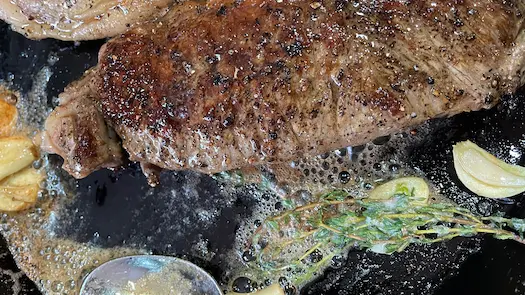
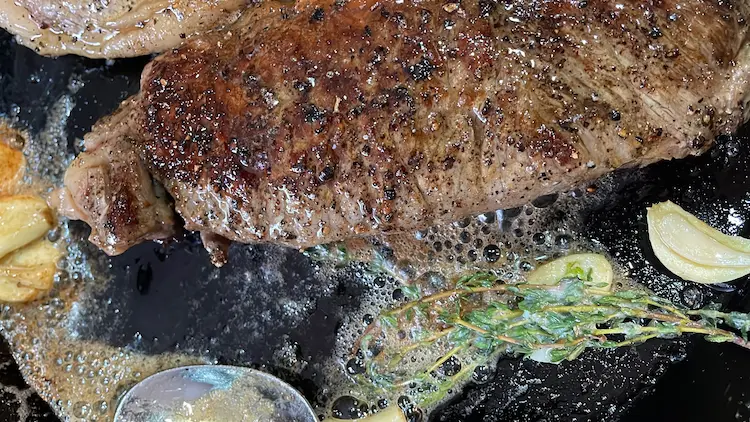
You can relax. Cooking a great steak at home is not that difficult. You don’t need special equipment or fancy ingredients. With a good pan, simple seasonings, and a little technique, you can cook a steak with a beautifully browned crust and a juicy center right on your stovetop.
If you’re concerned about gluten, this is a great skill to have. The ingredients are simple and naturally gluten-free. It's your technique and a good-quality steak that will give you a Michelin star worthy meal in minutes — no calling the chef and hoping for the best.
 |
Want simple guidance, trusted resources, and doable recipes delivered to your inbox once a week? |
|
What You Need
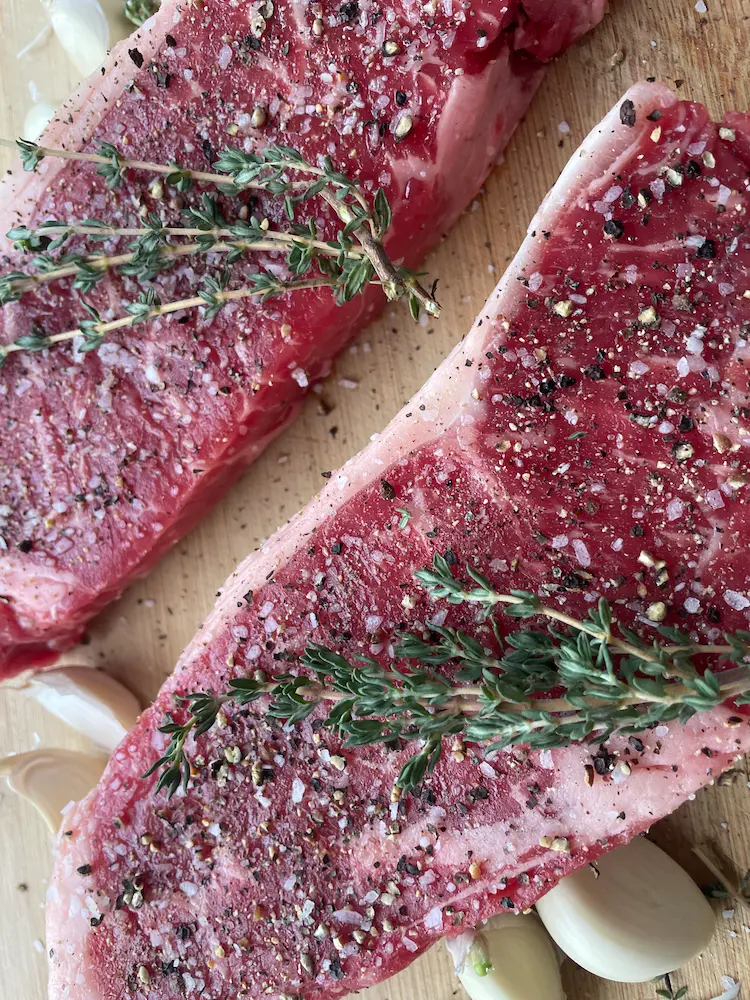
- Steak – A tender cut like ribeye, New York strip, or sirloin, ideally 1 to 1.5 inches thick.
- Seasoning – kosher Salt and black pepper.
- Oil – choose one with a high smoke point like avocado or a refined vegetable or refined coconut oil.
- Unsalted butter, fresh garlic, fresh herbs like thyme or rosemary. This is optional but will add flavor to the steak.
- Pan – cast-iron or stainless steel – not nonstick.
Step-by-Step – How to Pan-Fry a Steak
1. Bring the steak close to room temperature
If your steak is cold from the refrigerator, it will overcook on the outside before the inside is warm. Take it out of the fridge 30 to 45 minutes ahead of time.
2. Pat it dry and season well
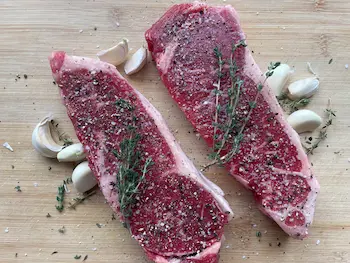
Moisture is the enemy of browning. Dry your steak completely with paper towels and season it generously, even the sides, with kosher salt and black pepper.
3. Heat your pan properly and add the oil
You want medium-high heat. Your pan should be hot enough to give you a nice brown crust but not so hot that it burns your expensive steak.
When you add the oil, it should shimmer but not smoke. Don’t add the butter yet.
4. Sear the steak
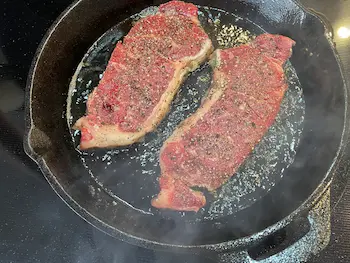
Place the steak in the pan away from you. This protects you from any splashing oil. You’ll hear a nice, loud sizzle.
Don’t try to move it too soon or it will stick to the pan and tear. Leave it for about 3 minutes then wiggle it gently with your tongs. If it doesn’t release, leave it another minute.
Flip it once to cook the other side.
Don’t crowd your pan, or you’ll cool it too quickly and your meat won’t brown. If you’re cooking more than one steak, make sure there is plenty of space.
If you’re cooking a thick steak, do the edges too.
5. Add butter and aromatics (optional)
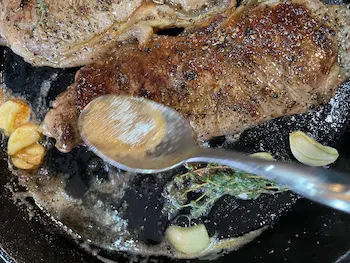
If you’re going to baste your steak with butter, garlic, and herbs, now is the time to add those to the pan.
Let the butter melt. Add the garlic and herbs then tip the pan a bit so the butter flows to the edge. Use a spoon and spoon the butter over the steak. Do this a few times as the second side cooks.
6. Cook to your preferred doneness
Steak can be cooked to your preferred doneness, though most chefs will say (and I agree) that medium-rare is best for flavor and texture. But cook it how you like it – it’s your steak.
Use an instant-read thermometer to test for doneness and remove your steak from the heat when it’s a few degrees below. It will finish cooking while it rests.
7. Rest before slicing
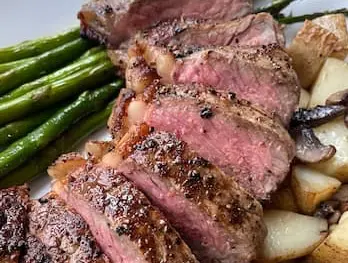
Always rest your steak for 5 – 10 minutes before you slice it.
Cooking drives the juices to the center of the meat, and they need time to redistribute. If you cut it too soon those juices will run out onto your cutting board and your steak may be drier and tougher than you’d like.
Once you understand this method, you can apply the same basic principles to other cuts of meat—matching the cut to the cooking method, controlling heat, and cooking to the right doneness. If you want to go deeper, see my complete guide to gluten-free meat cooking.
Steak Doneness Guide
|
Rare Medium Rare Medium Medium Well Well Done |
125–130°F (52–54°C) 130–135°F (55–57°C) 140–150°F (60–66°C) 150–155°F (66–68°C) 160°F+ (71°C+) |
Deep red center, very soft Warm red center, slightly firmer Pink center, noticeably firmer Slightly pink, mostly firm No pink, fully firm |
Remove your steak a few degrees early — it will continue to cook as it rests.
Steak Doneness Guide
Rare
125–130°F (52–54°C)
Deep red center, very soft
Medium Rare
130–135°F (55–57°C)
Warm red center, slightly firmer
Medium
140–150°F (60–66°C)
Pink center, noticeably firmer
Medium Well
150–155°F (66–68°C)
Slightly pink, mostly firm
Well Done
160°F+ (71°C+)
No pink, fully firm
Remove your steak a few degrees early. It will continue to cook as it rests.
How Long to Pan-Fry a Steak
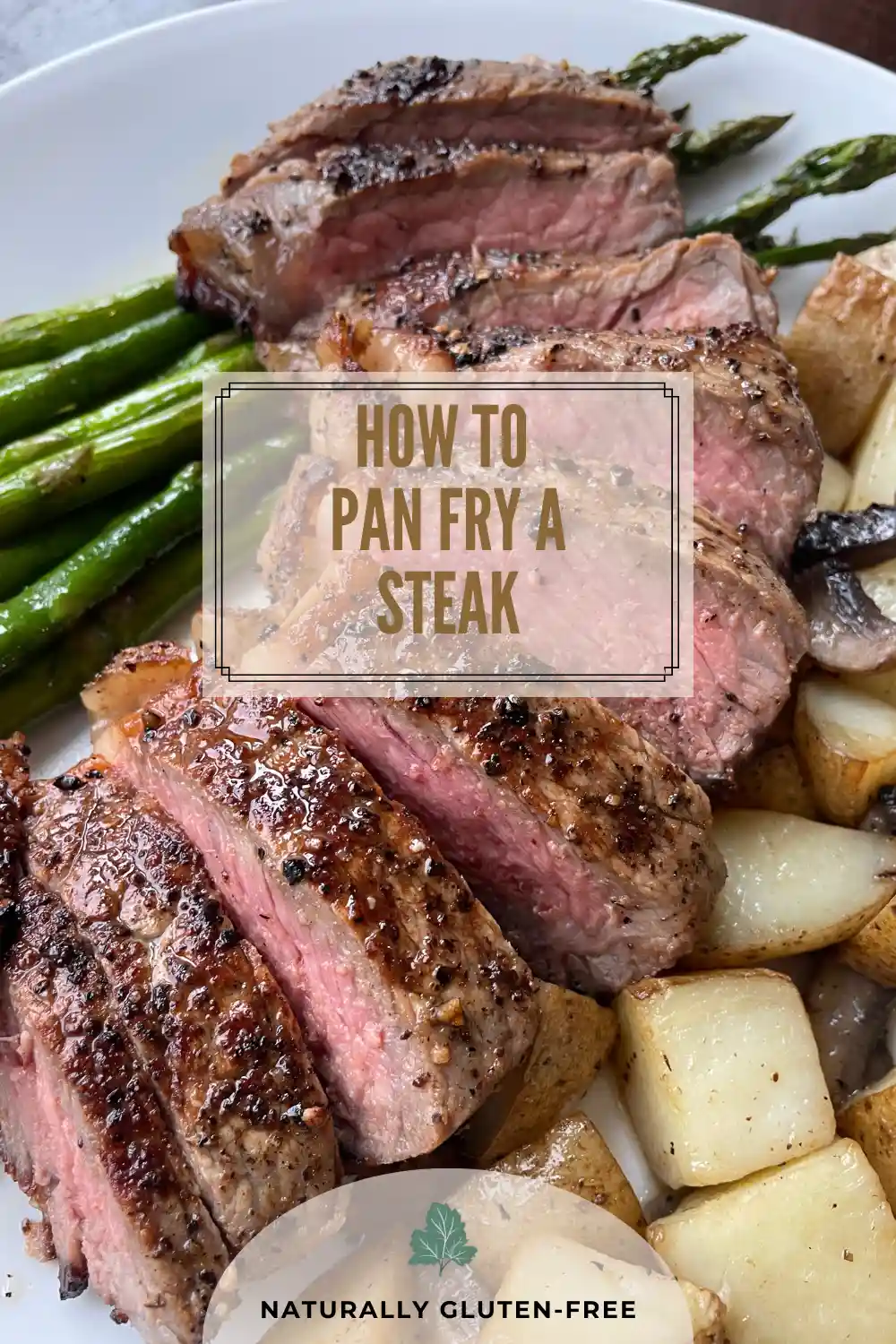
It can be tricky to answer this precisely. The pan, the temperature and the cut of meat all affect the timing. Here is a good guide, but use your instant-read thermometer.
1-inch steak
- Rare: approximately 2–3 minutes per side
- Medium rare: approximately 3–4 minutes per side
- Medium: approximately 4–5 minutes per side
1.5-inch steak
- Add about a minute to the above times, then turn the heat down and gently bring it up almost to your desired temperature.
Thicker cuts benefit from an initial sear, then a slower finish at a lower temperature. The same thing applies if you like your steak more well-done. Finishing it at a lower temperature will prevent the outside from over-cooking and keep your steak moist.
Best Pan for Cooking Steak
- Cast-iron is the best choice. It holds the heat evenly and a well-seasoned cast-iron pan is non-stick.
- Stainless steel works well too and can be a little easier to handle and care for.
- Non-stick pans can’t be heated high enough to sear your steak. Keep the non-stick for your eggs.
Oil vs Butter (When to Use Each)
Oil goes in first because it can handle the high heat required for searing. Just be sure to use an oil with a high smoke point. Avocado oil works well. So does refined coconut oil or vegetable oil. Olive oil or virgin coconut oil will smoke and give you a burnt, rancid flavor.
Butter goes in only after you’ve flipped your steak. By then the pan has cooled a bit. If you put the butter in right away, the milk solids will burn.
Common Mistakes (Quick Fixes)
I’ve made all these mistakes myself, so no judgement here, just practical fixes.
Why doesn’t my steak have a nice, brown crust?
Why doesn’t my steak have a nice, brown crust?
Your steak may have had some moisture on it, your pan was not hot enough, or your pan was too crowded.
Why did my steak stick to the pan?
Why did my steak stick to the pan?
You tried to move it too early. Let it cook and it will release from the bottom of the pan.
Why is my steak burnt / overcooked on the outside and raw on the inside?
Why is my steak burnt / overcooked on the outside and raw on the inside?
Your pan was too hot, or your steak was too cold when it went in the pan. Let the steak come to room temperature before cooking. If the outside is browning too quickly, reduce the heat after the initial sear.
Why is my steak dry?
Why is my steak dry?
You’ve likely overcooked it, or you may have sliced it too soon and let the juices run out. Use an instant-read thermometer to check for doneness. Remove your steak from the pan a few degrees below the desired temperature and let it rest for 5 – 10 minutes. For thicker steaks or well-done steaks, sear them then finish cooking at lower temperature.
Optional: Simple Pan Sauce
While your steak is resting you have time to make a beautiful pan sauce that will elevate your meal to restaurant-quality in just five minutes.
Pour off most of the fat, then add a splash of red wine. Stir up those brown bits from the bottom of the pan then add ½ cup of gluten-free beef broth. Let everything simmer for a minute or two. You’ll end up with about ¼ cup of intensely flavorful sauce. Remove it from the heat. Swirl in a knob of butter and you’re done. A restaurant-worthy pan sauce in under five minutes.
Spoon a couple of tablespoons of the sauce onto the plate and lay your steak over top, with a little sauce peeking out underneath.
If you want to take it further, see my complete guide to homemade gluten-free sauces. Homemade Gluten-Free Sauces: How to Make Them + Easy Recipes
For more variations on simple pan sauces see may article on How to Make a Pan Sauce (Easy Restaurant-Quality Sauce in 5 Minutes)
Final Thought
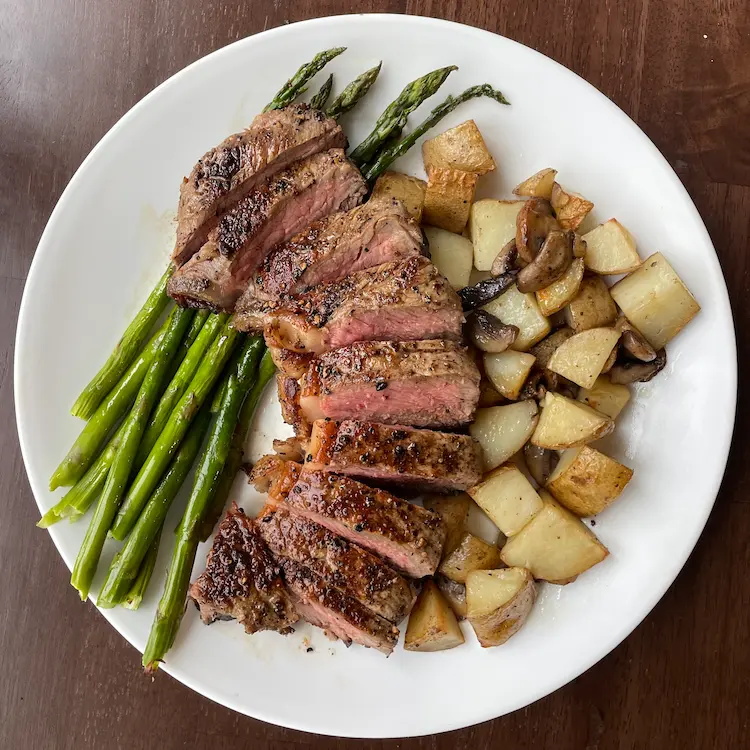
Do you feel better now about that steak? Is it simpler than you thought it would be? You don’t need to go to a fancy restaurant to get an amazing meal. You don’t even need a special occasion. Just a good steak and a hot, oiled pan. Now go make yourself some dinner!
|
|
Want simple guidance, trusted resources, and doable recipes delivered to your inbox once a week? |
|

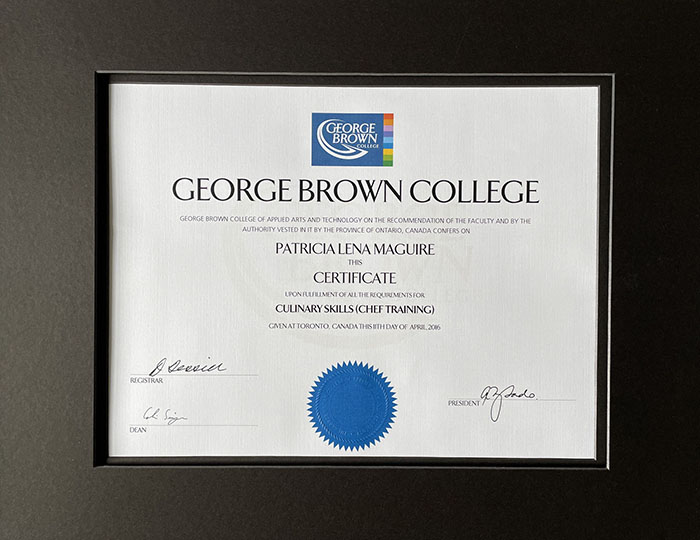
Patty Maguire is a George Brown College culinary graduate whose training focused on nutrition and cooking for special diets.
Since her celiac diagnosis in 2012, she has shared a practical, whole-food approach to naturally gluten-free living that helps readers cook with confidence, eat out safely, travel well, and live fully.
Rooted in farm-family values and simple home cooking, her work has been recognised by Feedspot’s top 10 Canadian gluten-free blogs list.
You might like these
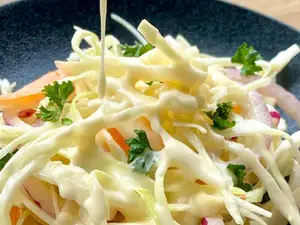
Gluten-Free Salad Dressing: Easy Formula + 5 Simple Recipes
Learn a simple formula for gluten-free salad dressing plus easy recipes you can make in minutes. No bottles needed—just fresh, safe ingredients.
Gluten Free Meal Planning
meal planning and shopping list for a typical gluten free week
Perfect Poached Eggs
Protein is an essential part of a gluten free breakfast and these perfect poached eggs can be the quick easy centerpiece


Hi, I'm Patty.
I'm a person with celiac disease, a culinary school grad, and a lifelong student of food and natural healing.
After my diagnosis in 2012, I enrolled in the Chef’s School at George Brown College and earned my Culinary Skills diploma, focusing on nutrition and cooking for special diets.
Cooking has changed my life — and helped me take back my health. Now, I’m here to help you do the same.
Let’s do this together!

Subscribe!
Get Naturally Gluten-Free Digest
Practical gluten-free tips + a featured recipe/article
delivered to your inbox.
Recent Articles


-
How to Prep Ahead, Store and Reheat Gluten-Free Sheet Pan Dinners
Aug 07, 26 01:48 PM
 Learn how to prep gluten-free sheet pan dinners ahead, store leftovers safely and reheat them without drying out. Includes practical tips and a printable guide.
 -
Sheet Pan Cooking Made Easy: Get Everything to Finish at the Same Time
Jul 22, 26 04:14 PM
 Learn how to stagger sheet pan ingredients so everything finishes together. A simple method using timing windows—not complicated minute-by-minute schedules.
 -
Sheet Pan Cook Time Chart for Proteins and Vegetables
Jul 22, 26 04:13 PM
 Compare sheet pan cook times for proteins and vegetables, timing windows and safe internal temperatures. Includes a printable cook time chart.


Popular Articles


Trained in Culinary Skills with a focus on Nutrition and Healthy Eating!
Visit NGF (NaturallyGluten-Free) on Facebook at: https://www.facebook.com/naturallyglutenfree
On Substack at: Naturally Gluten-Free Digest
Patricia Maguire, copyright © 2026 naturallygluten-free.com Port Hope, Ontario, Canada. All rights reserved
Subscribe to
Naturally Gluten-Free Digest
- Feel safer and more confident eating gluten-free
- Save time and money with practical strategies
- Discover trustworthy recipes and resources without wading through misinformation
It's Free!
You won't have to remember to check back.
NGF will land in your inbox weekly.
and
As a thank-you from me you get a free
Printable Gluten-Free Food List
that you can pin to your fridge or take shopping.
I respect your privacy!
I won't use your email for anything but to send you the newsletter.