- Home
- Gluten Free Cooking
- Homemade Gluten-Free Sauces
- Gluten-Free Salad-Dressing
Gluten-Free Salad Dressing: Simple Formula + 5 Easy Recipes
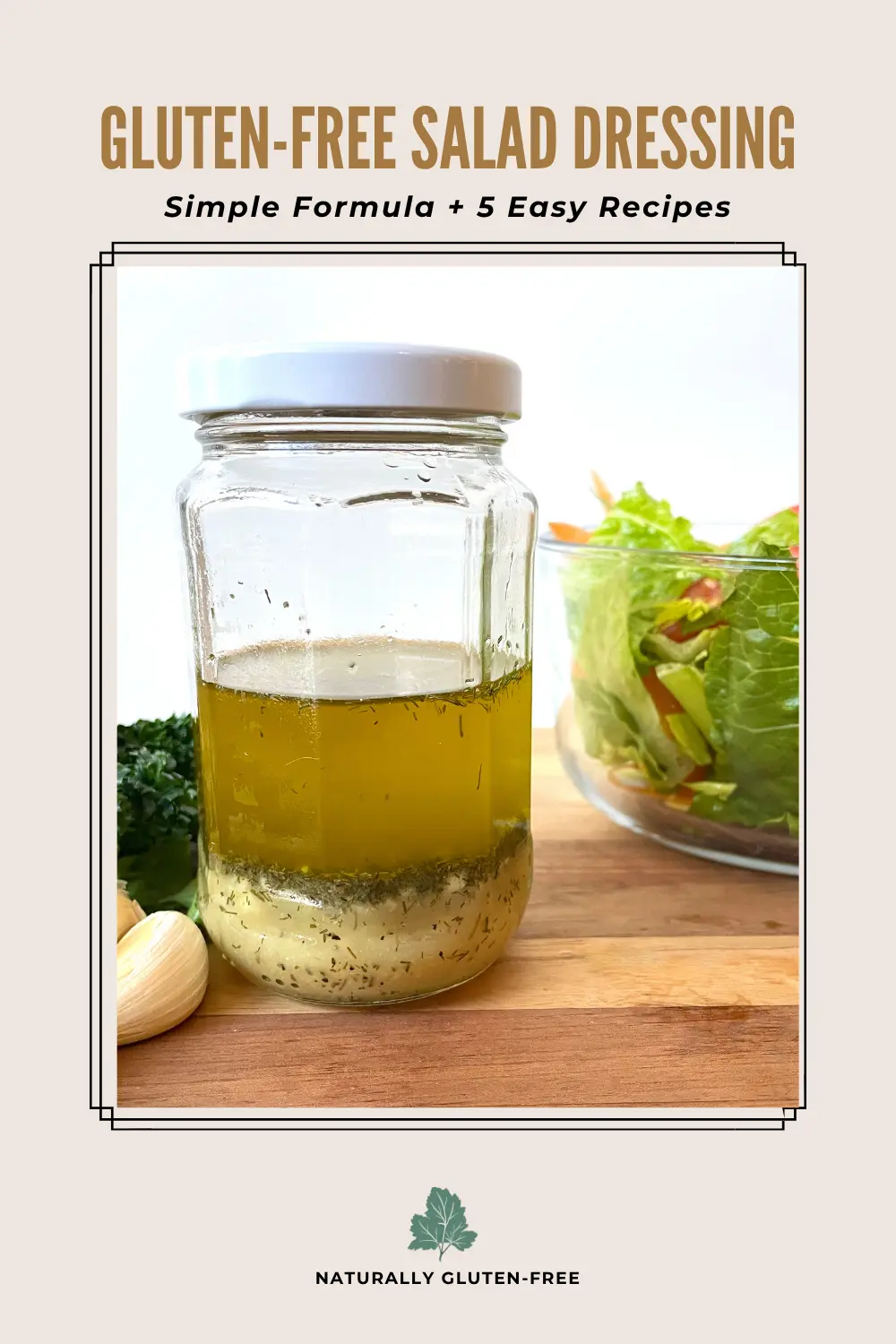
Gluten-free salad dressing might be the easiest thing you can make from scratch. And it will save you money and space too!
Why keep a half dozen bottles in your fridge when a few items from your pantry will give you a fresh and tasty dressing you know is gluten-free and safe.
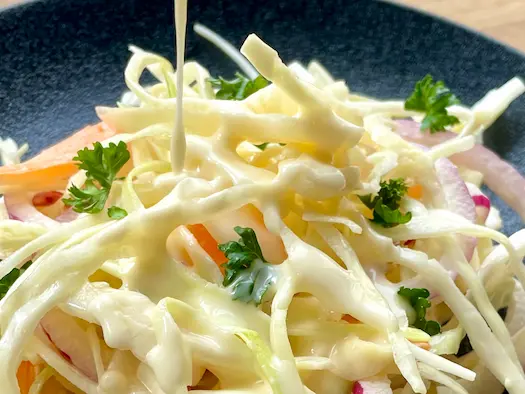
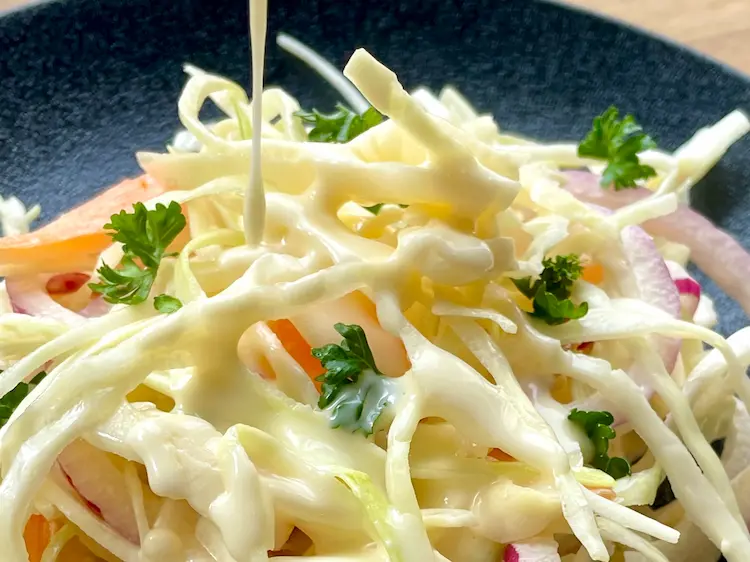
I’m going to show you one simple formula and a few easy recipes that you’ll use over and over. Soon you’ll be creating your own homemade gluten-free salad dressings, and you won’t need a recipe at all.
On this page:
Why Make Your Own Gluten-Free Salad Dressing?
The Simple Formula for Homemade Salad Dressing
5 Easy Gluten-Free Salad Dressing Recipes
What Makes a Salad Dressing Gluten-Free (or Not)
Why Make Your Own Gluten-Free Salad Dressing?
- You control the ingredients – so you can trust that it’s gluten-free
- The flavor is better – you’ll use fresh, simple ingredients without processed preservatives and stabilizers.
If you have celiac disease, you want delicious food with simple ingredients and the comfort that it is safe – salad dressing is a good place to start:
Beyond safety, homemade dressing just tastes better. Fresh lemon juice, good quality olive oil, real garlic — these things make a difference. And as a bonus, you’ll have more room in your fridge.
 |
Want simple guidance, trusted resources, and doable recipes delivered to your inbox once a week? |
|
The Simple Formula for Homemade Salad Dressing
Here it is — a simple template you can use for any vinaigrette-style salad dressing. Once you learn this and try a few variations, I know you’ll be hooked.
The Basic Vinaigrette Ratio
- 1 part acid – this could be vinegar, lemon juice or lime juice
- 2–3 parts oil – usually olive oil but avocado oil works beautifully too.
- Salt + pepper
Taste your vinaigrette and adjust to your own preference. More acid gives it a brighter “snap.” A little more oil gives it a smoother taste and a fuller mouthfeel. I like a brighter taste, so I go with the 2:1 oil to acid ratio.
Flavor Builders (Make It Your Own)
Here is where you can experiment and let your personality shine. Start with these standards and in time you’ll find more fun and interesting alternatives.
- Dijon mustard – adds flavor and acts as an emulsifier (helps to hold the oil and vinegar together)
- Honey or maple syrup – adds sweetness and balances the acidity
- Garlic or shallots – fresh minced garlic gives a strong punch; shallots are milder and sweeter.
- Fresh or dried herbs – whatever your favorites are — parsley, dill, tarragon, or cilantro. If you have a French or Italian herb blend in your pantry that will work nicely.
5 Easy Gluten-Free Salad Dressing Recipes
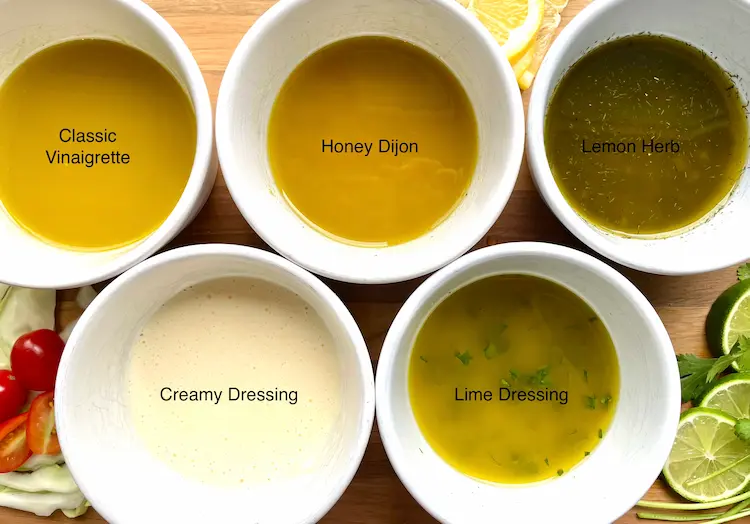
These mini recipes will give you about 3 or 4 servings – enough for a family-sized green salad. Mix it up in the bottom of the bowl, then toss with your salad ingredients just before serving.
I like to make enough dressing for a few days, so I go with 1/3 cup of acid to 2/3 cup of oil. Then I add my flavorings, shake it up in a bottle and pour a little over my salad. The rest stores nicely in the fridge for several days.
Classic Everyday Vinaigrette
- 2 tbsp vinegar (red wine, white wine or balsamic)
- 4–6 tbsp olive oil
- 1 tsp Dijon mustard
- Salt + pepper to taste
This is your basic vinaigrette that will go with any green salad. I love the robust flavor of a balsamic vinaigrette. For a lighter summery taste go with the white wine vinegar.
Want to give it a try? It’s perfect on a tossed salad, or I use a version of this dressing in my Buckwheat Salad with Beets, Peaches and Feta.
Honey Dijon Dressing
- 2 tbsp white wine vinegar
- 4 tbsp olive oil
- 1 tsp Dijon
- 1 tbsp honey
This is beautiful with chicken or potato salad or toss it in with steamed broccoli.
Lemon Herb Dressing
- 2 tbsp lemon juice
- 4 tbsp olive oil
- ½ tsp dried dill or parsley
- Optional garlic
This light, fresh dressing is perfect for your summer salad and a grilled salmon filet. Or break up some cold salmon into your salad and drizzle with dressing.
Simple Creamy Dressing (Mayo-Based)
- ½ cup mayonnaise
- 2–3 tbsp vinegar
- 1 tbsp honey or sugar
- Salt + pepper
This is your classic coleslaw dressing. Shred up some cabbage, with a little carrot and cucumber. Toss in this dressing and let it marinate in the fridge for a few hours before dinner. I also use a version of this dressing in my broccoli salad – it’s a hit at parties.
Lime Dressing (Great for Mexican-Inspired Meals)
- 2 tbsp lime juice
- 4 tbsp olive oil
- Pinch salt
- 1 tsp honey
- 1 tbsp chopped cilantro
Of course you can drizzle this over your salad greens, but how about a Mexican twist. Mix kernel corn with quartered cherry tomatoes, diced sweet onion and pepper and a handful of chopped cilantro. Like a little heat? Chop in a jalapeño, just keep a light touch.
What Makes a Salad Dressing Gluten-Free (or Not)
Most salad dressings are naturally gluten-free, even the ones in the store. There are a few ingredients to watch for so be sure to check labels. When making your own dressing choose gluten-free substitutions.
These are the ingredients you need to watch for:
- Malt vinegar – made from barley and contains gluten
- Soy sauce – common in Asian inspired dressings
- Worcestershire – often appears in Caesar dressing
- Additives in bottled dressings – starches and thickeners
Choosing the Best Ingredients
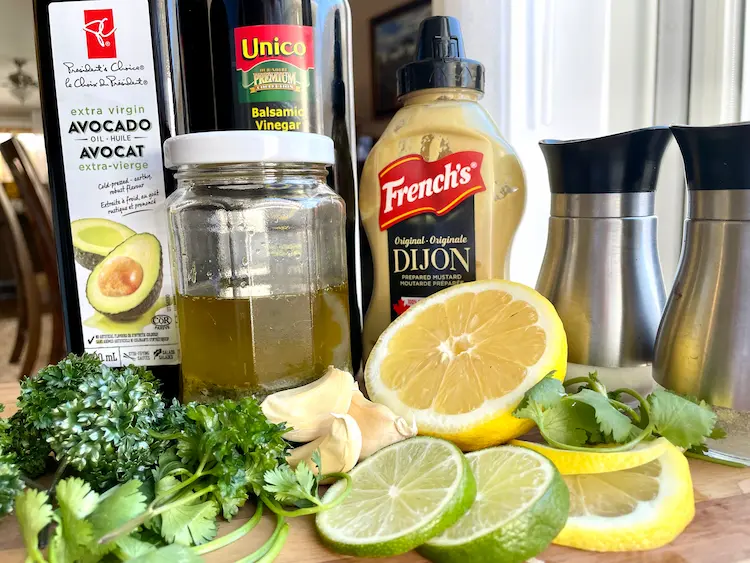
As with any recipe, quality ingredients are the key to taste and nutrition. Here is some guidance to help you choose.
Oil for Salad Dressing
Extra virgin olive oil is the standard. Its robust and complex flavor ranges from floral and fruity to peppery and slightly bitter. If you find it too strong you can dilute it with canola oil.
Avocado oil is rich and buttery in flavor and a little milder than olive oil. It’s my personal favorite for salad dressing.
Canola or vegetable oil are both fine for salad dressings too. They are much milder in flavor than olive or avocado oils and more cost-effective.
Choosing Your Acid
The acid you choose will depend on the flavor profile you’re looking for and what you’re pairing it with.
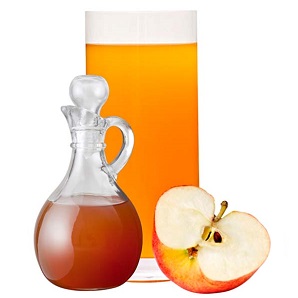
Vinegar is a great choice because it’s simple and keeps well in the pantry. White wine vinegar is light and fruity, red wine vinegar is tangy and smoky. Balsamic vinegar is rich, robust, and complex. Avoid malt vinegar. It’s made with barley and is not gluten-free.
Citrus juices like lime or lemon bring bright fruity notes. You can use bottled juices though they are often a little bitter compared to fresh — a honey or sugar will balance that out. Squeezing a fresh lemon or lime into your salad dressing gives it more sweetness and complexity. Experiment with other citrus juices like orange or grapefruit.
Quality Flavor Builders
Dijon mustard is a classic addition to salad dressing. It gives a pungent slightly spicy tone and helps the oil and vinegar emulsify. Most Dijon mustards are gluten-free but check the label to be sure.
Herbs and aromatics like garlic, shallots or ginger are indispensable flavor boosters. Fresh is best, but I’m all for using what’s in your pantry, so if you have dried herbs or garlic powder, they will work just fine.
Tips for Better Homemade Salad Dressing
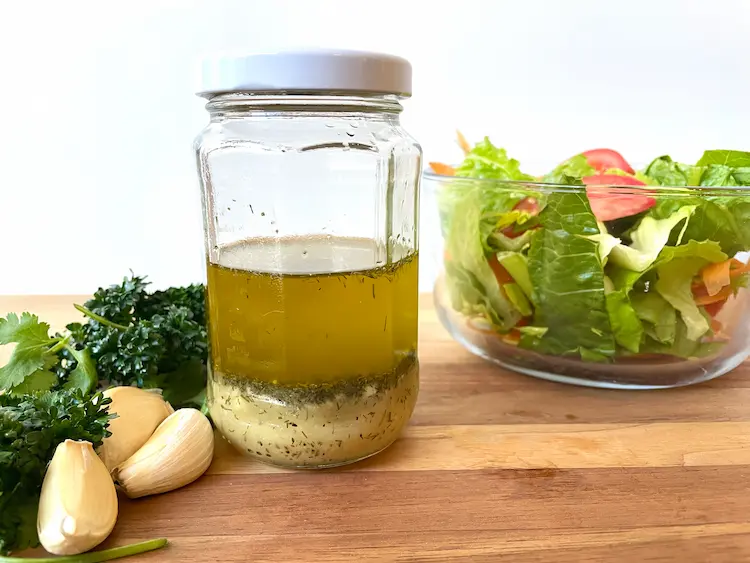
Here are some tricks I’ve learned from experience. These will make your dressings even better.
- Make your salad dressing in a bottle or jar. You can shake it up for better emulsifying.
- Taste and adjust – more acid for a brighter snap, more oil for a smoother mouthfeel. A little honey, maple syrup or sugar to balance the acidity.
- Let your dressing sit 5–10 minutes for flavors to mix.
- Use a good quality oil like extra virgin olive oil or avocado oil.
- Olive oil may solidify in the fridge – this is normal. Set it out 15 minutes before your meal or rest it in a dish of warm water for a few minutes.
How to Store Homemade Dressing
If, like me, you like to make up a little extra dressing to have on hand, you can easily store it in a bottle or jar in the fridge.
- A simple vinaigrette will keep for about 2 weeks.
- A creamy mayonnaise dressing is good for about a week.
- If you add perishable ingredients to your dressing the shelf life is shorter.
- Bring olive oil-based dressings out of the fridge 15 minutes before serving.
- Label your jar with the date so you won’t have to guess how old it is.
A Few Simple Tools
You don’t need any special equipment to make your own salad dressing. A jar with a lid will do just fine.
But if you find yourself making it often, a few simple tools can make it faster and easier. Here are some items I use:
Salad Dressing Mixer - This one has recipes on the side. I use mine all the time.
Whisk - great for emulsifying
Measuring Cups and Spoons - to get the ratios right
Mixing Bowl - if you're not making it in a jar or mixer. You can serve your salad in this too.
I've included these links for your convenience. If you decide to purchase through one of them, I may earn a small commission at no extra charge to you.
FAQs About Gluten-Free Salad Dressing
What type of salad dressing is gluten-free?
What type of salad dressing is gluten-free?
Many salad dressings are naturally gluten-free, especially simple vinaigrettes made with oil, vinegar, and seasonings. The safest option is homemade dressing using whole ingredients. For store-bought dressings, always check labels for gluten.
Can people with celiac disease have balsamic vinaigrette?
Can people with celiac disease have balsamic vinaigrette?
Yes — balsamic vinaigrette is usually gluten-free because it’s made from grapes, not grains. The only concern is added ingredients in bottled versions, so check the label to be sure it’s safe for a gluten-free diet.
Is Caesar dressing gluten-free?
Is Caesar dressing gluten-free?
Not always. Traditional Caesar dressing often contains Worcestershire sauce, which may include malt vinegar (a source of gluten). Some versions also include additives or thickeners. If you’re buying it, check the label or choose a certified gluten-free option.
What is the safest salad dressing for celiac disease?
What is the safest salad dressing for celiac disease?
The safest option is a simple homemade vinaigrette made from oil, vinegar or lemon juice, and seasonings. When buying bottled dressing, look for clearly labeled gluten-free products.
Does mayonnaise have gluten?
Does mayonnaise have gluten?
Most mayonnaise is naturally gluten-free because it’s made from oil, eggs, and acid (like vinegar or lemon juice). It’s still important to check the label, especially for flavored varieties or specialty brands.
Is vinaigrette gluten-free?
Is vinaigrette gluten-free?
Yes — most vinaigrettes are naturally gluten-free because they are made from oil, vinegar or citrus juice, and seasonings. The main exception is malt vinegar, which contains gluten. Always check ingredients if you’re unsure.
Are You Ready to Get Started?
Are you ready to start mixing up your own homemade gluten-free salad dressings? I hope you’ll give it a try, and I hope you’ll find it as fun and satisfying as I do.
Start simple, then experiment with different flavors and variations. The more you make it, the more natural it feels. And the best part — you control the ingredients, so you know it’s safe.
|
|
Want simple guidance, trusted resources, and doable recipes delivered to your inbox once a week? |
|

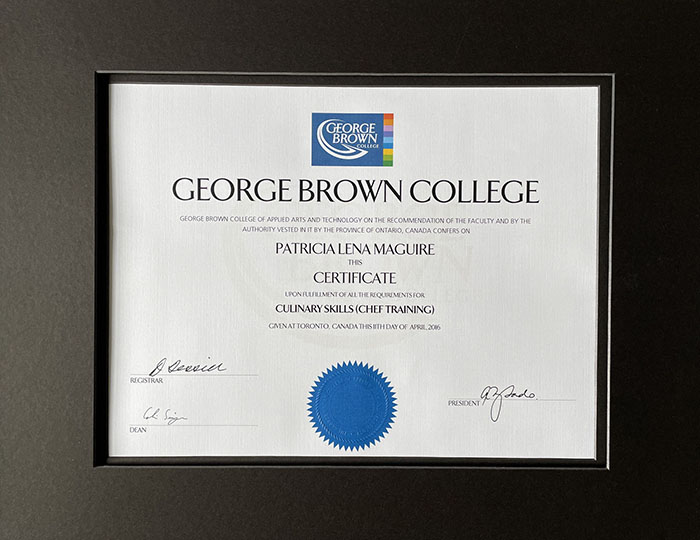
Patty Maguire is a George Brown College culinary graduate whose training focused on nutrition and cooking for special diets.
Since her celiac diagnosis in 2012, she has shared a practical, whole-food approach to naturally gluten-free living that helps readers cook with confidence, eat out safely, travel well, and live fully.
Rooted in farm-family values and simple home cooking, her work has been recognised by Feedspot’s top 10 Canadian gluten-free blogs list.
You might like these
Gluten Free Meal Planning
meal planning and shopping list for a typical gluten free week
Perfect Poached Eggs
Protein is an essential part of a gluten free breakfast and these perfect poached eggs can be the quick easy centerpiece
Make the Best Gluten Free Omelet Bursting with Tasty Fillings
In this guide I’ll walk you through the steps to craft a beautiful, silky smooth, light and fluffy omelet and provide tips to elevate your omelet game.

Home > Gluten-Free Cooking > Gluten Free Salad Dressing

Hi, I'm Patty.
I'm a person with celiac disease, a culinary school grad, and a lifelong student of food and natural healing.
After my diagnosis in 2012, I enrolled in the Chef’s School at George Brown College and earned my Culinary Skills diploma, focusing on nutrition and cooking for special diets.
Cooking has changed my life — and helped me take back my health. Now, I’m here to help you do the same.
Let’s do this together!

Subscribe!
Get Naturally Gluten-Free Digest
Practical gluten-free tips + a featured recipe/article
delivered to your inbox.
Recent Articles


-
How to Prep Ahead, Store and Reheat Gluten-Free Sheet Pan Dinners
Aug 07, 26 01:48 PM
 Learn how to prep gluten-free sheet pan dinners ahead, store leftovers safely and reheat them without drying out. Includes practical tips and a printable guide.
 -
Sheet Pan Cooking Made Easy: Get Everything to Finish at the Same Time
Jul 22, 26 04:14 PM
 Learn how to stagger sheet pan ingredients so everything finishes together. A simple method using timing windows—not complicated minute-by-minute schedules.
 -
Sheet Pan Cook Time Chart for Proteins and Vegetables
Jul 22, 26 04:13 PM
 Compare sheet pan cook times for proteins and vegetables, timing windows and safe internal temperatures. Includes a printable cook time chart.


Popular Articles


Trained in Culinary Skills with a focus on Nutrition and Healthy Eating!
Visit NGF (NaturallyGluten-Free) on Facebook at: https://www.facebook.com/naturallyglutenfree
On Substack at: Naturally Gluten-Free Digest
Patricia Maguire, copyright © 2026 naturallygluten-free.com Port Hope, Ontario, Canada. All rights reserved
Subscribe to
Naturally Gluten-Free Digest
- Feel safer and more confident eating gluten-free
- Save time and money with practical strategies
- Discover trustworthy recipes and resources without wading through misinformation
It's Free!
You won't have to remember to check back.
NGF will land in your inbox weekly.
and
As a thank-you from me you get a free
Printable Gluten-Free Food List
that you can pin to your fridge or take shopping.
I respect your privacy!
I won't use your email for anything but to send you the newsletter.