- Home
- Gluten Free Food
- Gluten-Free Recipe Substitutions
Gluten-Free Recipe Substitutions: Easy Swaps for Everyday Cooking
When I first started cooking without gluten, I looked at all my favorite recipes and thought, “I can’t eat any of this.”
So many of those recipes contained bottled sauces, canned soups, or packaged marinades and spice mixes that I knew contained gluten.
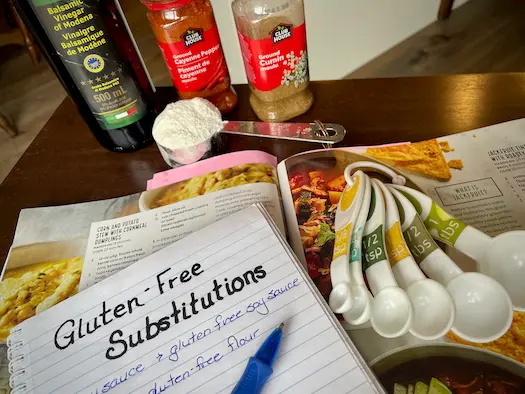
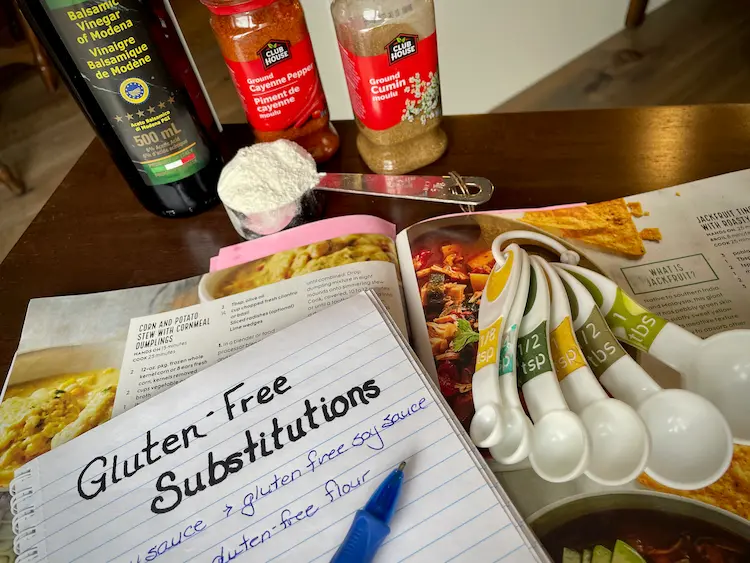
Are you also worried that you'll have to throw out all your cookbooks and never get to enjoy your favorite recipes again?
You can relax — many of those ingredients can be replaced with naturally gluten-free foods you may already have in your kitchen.
Gluten-free recipe substitutions are simple swaps that allow you to enjoy your favorite recipes — just without the gluten.
What You’ll Find on This Page
Think of this as your go-to reference when you’re holding a recipe and asking, “Okay, but what do I actually buy?”
We’ll cover:
- The most common gluten-containing ingredients and how to replace them
- When simple substitutions don’t work—and how to adjust
- How to convert everyday recipes to gluten-free
Once you’re comfortable with the best gluten-free ingredients for your favorite recipes, you’ll be back to cooking daily meals with confidence.
Understanding Gluten-Free Recipe Substitutions
Converting your recipe to gluten-free isn’t just about swapping out wheat flour for a different type of gluten-free flour. Gluten does different things in different recipes, and understanding its function will help you know how to replace it.
- Wheat flour can be used as a thickener for sauces or soups.
- Breadcrumbs or crushed crackers can be used as a coating for meats or vegetables or as a binder in meatballs or meatloaf.
- Sauces and condiments like soy sauce or mustard* are used for flavor.
- Spice blends or packaged marinades may have gluten added as a filler or as an anti-caking agent
- Pasta or grains like barley or farro (a type of wheat) can be used to bulk up soups or stews
*Most mustard is gluten-free, but some grainy mustards may contain gluten. Check labels to be sure.
 |
Want simple guidance, trusted resources, and doable recipes delivered to your inbox once a week? |
|
Hidden and Overlooked Sources of Gluten
The term “hidden gluten” can shake your confidence. I still often hear myself muttering, “Why do they need to put gluten in this” while standing in the grocery aisle.
Yet it’s not really hidden, it’s right there on the label. Once you become familiar with common “hiding” places for gluten, you’ll know what to look for and how to avoid it. Here are the most common culprits to watch for:
- Soy sauce — Most traditional soy sauce is brewed with wheat.
- Worcestershire sauce — Some brands contain malt vinegar, which is made from barley.
- Broths and stocks — Many commercial broths use wheat as a flavor enhancer or thickener.
- Seasoning packets and spice blends — Anti-caking agents and fillers in spice mixes can contain gluten.
- Canned soups — Flour is a common thickener in canned and packaged soups.
- Salad dressings and marinades — Malt vinegar and soy sauce can be sources of gluten.
- Condiments — Ketchup and mustard are usually gluten-free. BBQ sauces are sometimes made with gluten-containing vinegars or additives.
- Oats — Oats are naturally gluten-free but are almost always cross-contaminated during processing. Only use oats labeled "certified gluten-free."
- Imitation crab and processed meats — These often contain wheat starch as a binder.
I can't stress this enough: always read labels, even on products you've bought before. Manufacturers change their formulas, and what was safe last year might not be safe today. If a label says, "may contain wheat," leave it out and find a gluten-free alternative.
If you'd like to learn a simple formula for homemade vinaigrettes and creamy dressings you can make in minutes, my Guide to Gluten-Free Salad Dressing can help.
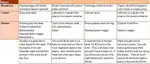
Quick Gluten-Free Substitution Guide
In many cases, the simplest substitutions are also the best—using naturally gluten-free ingredients instead of relying on heavily processed alternatives.
|
Gluten Ingredient |
Gluten-Free Substitution |
|
Wheat flour as a thickener |
|
|
Breadcrumbs as a coating |
|
|
Breadcrumbs as a binder |
|
|
Soy sauce |
|
|
Worcestershire sauce |
|
|
Other sauces and soups |
|
|
Spice blends |
|
|
Packaged marinades |
|
|
Wheat pasta |
|
|
Gluten grains (barley, farro, bulgar) |
|
|
Flour tortillas |
|
If you’d like more detail, see how to thicken soups and sauces without gluten.
How to Convert a Recipe to Gluten-Free
Savory Recipes (Everyday Cooking)
Recipes you use to make everyday gluten-free meals are the easiest to convert. You’re probably already thinking of some of your favorite dishes and how you can turn them into new gluten-free favorites.
Here is a simple step-by-step guide:
- Read through the entire ingredient list and identify ingredients that contain or may contain gluten. Use the hidden sources list above as your guide.
- Check your pantry staples. Double-check all the labels to be sure everything is gluten-free.
- Determine the function of the ingredient in the recipe (thickener, binder, flavor, or bulk) and decide which gluten-free replacement you want to use.
- Adjust cooking times if needed. GF pasta cooks faster and different grains have different cooking times.
- Taste as you go. Some GF substitutes have a slightly different flavor. Adjust seasoning as needed.
- Write down what worked. I put sticky notes in my cookbooks or make notes in my recipe app. When you find a version that works, you'll want to remember it.
Finding what works best for your recipe may take a little trial and error. But that’s fine, cooking should be about having fun and experimenting, not about perfection every time.
Baking Recipes (Desserts, Breads, Pastries)
Gluten-free baking is a little different. In baking, gluten provides structure and spring to breads, cakes, and muffins. For this reason, 1:1 substitutions often don’t work. The easiest baking recipes to convert are ones that are heavy and bulky by nature. Items like:
- Oatmeal cookies
- Brownies
- Carrot or fruit cake
If you want to go deeper into gluten-free baking, I have a complete gluten-free baking guide.
When Gluten-Free Substitutions Don’t Work (And Why)
I want to be real with you here, because I think honesty is more helpful than cheerleading. Most everyday cooking substitutions work beautifully — but there will be situations where things don’t work out quite as planned.
Here are some common problems and simple solutions to help you fix them.
Baked Goods are Dense
Baking is different than cooking. If you’re having problems with texture or rise try these fixes:
- Add more eggs.
- Add more binder (xanthan gum, or psyllium husk).
- Rest your batter.
- Use a recipe specifically formulated for gluten-free baking.
👉 For more help see my Gluten-Free Baking Guide
Recipe Doesn’t Brown
Gluten-free flours and coatings often don’t brown as much so you may be frustrated trying to get the right color.
- Be careful not to over-cook expecting it to brown more.
- For sauces and stews add a browning agent like soy sauce or chocolate for a deeper color.
👉 How Gluten-Free Flours Behave
Sauces or Soups are Too Thick / Not Thick Enough
- Adjust the amount of starch or gluten-free flour.
- Add more liquid if needed.
Gluten-free Pasta is Mushy
- Follow the cooking time on the package exactly.
- Don’t allow pasta to sit in hot liquid. For soups, consider cooking the pasta separately and adding it before serving.
👉 How to Cook Gluten-Free Pasta
Where to Go Next
If you’d like more detailed help with specific substitutions, these guides will take you further:
Making Gluten-Free Cooking Feel Natural
Once you understand how gluten functions in a recipe, substitutions become much more manageable.
You don’t need to replace everything perfectly—you just need to know which ingredients matter and how to adjust when they do.
Start with simple swaps, experiment as you go, and don’t be afraid of a little trial and error. With time, adapting your favorite recipes to gluten-free becomes second nature.
|
|
Want simple guidance, trusted resources, and doable recipes delivered to your inbox once a week? |
|

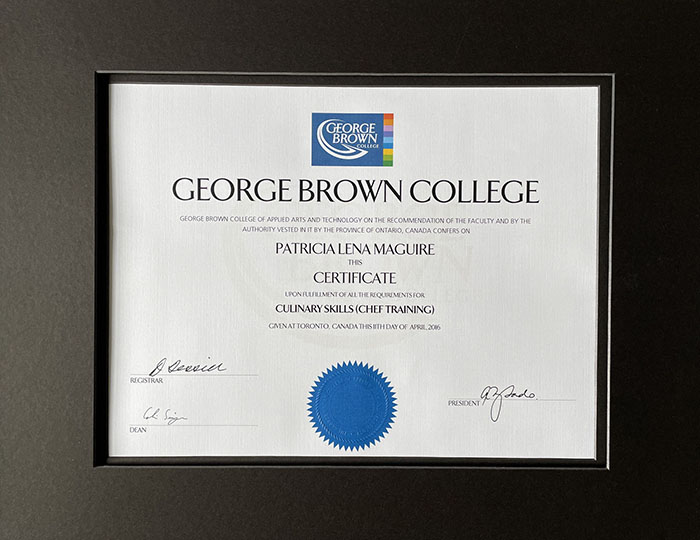
Patty Maguire is a George Brown College culinary graduate whose training focused on nutrition and cooking for special diets.
Since her celiac diagnosis in 2012, she has shared a practical, whole-food approach to naturally gluten-free living that helps readers cook with confidence, eat out safely, travel well, and live fully.
Rooted in farm-family values and simple home cooking, her work has been recognised by Feedspot’s top 10 Canadian gluten-free blogs list.
You might like these
Gluten-Free Salad Dressing: Easy Formula + 5 Simple Recipes
Learn a simple formula for gluten-free salad dressing plus easy recipes you can make in minutes. No bottles needed—just fresh, safe ingredients.
Gluten Free Meal Planning
meal planning and shopping list for a typical gluten free week
Perfect Poached Eggs
Protein is an essential part of a gluten free breakfast and these perfect poached eggs can be the quick easy centerpiece


Hi, I'm Patty.
I'm a person with celiac disease, a culinary school grad, and a lifelong student of food and natural healing.
After my diagnosis in 2012, I enrolled in the Chef’s School at George Brown College and earned my Culinary Skills diploma, focusing on nutrition and cooking for special diets.
Cooking has changed my life — and helped me take back my health. Now, I’m here to help you do the same.
Let’s do this together!

Subscribe!
Get Naturally Gluten-Free Digest
Practical gluten-free tips + a featured recipe/article
delivered to your inbox.
Recent Articles


-
How to Prep Ahead, Store and Reheat Gluten-Free Sheet Pan Dinners
Aug 07, 26 01:48 PM
 Learn how to prep gluten-free sheet pan dinners ahead, store leftovers safely and reheat them without drying out. Includes practical tips and a printable guide.
 -
Sheet Pan Cooking Made Easy: Get Everything to Finish at the Same Time
Jul 22, 26 04:14 PM
 Learn how to stagger sheet pan ingredients so everything finishes together. A simple method using timing windows—not complicated minute-by-minute schedules.
 -
Sheet Pan Cook Time Chart for Proteins and Vegetables
Jul 22, 26 04:13 PM
 Compare sheet pan cook times for proteins and vegetables, timing windows and safe internal temperatures. Includes a printable cook time chart.


Popular Articles


Trained in Culinary Skills with a focus on Nutrition and Healthy Eating!
Visit NGF (NaturallyGluten-Free) on Facebook at: https://www.facebook.com/naturallyglutenfree
On Substack at: Naturally Gluten-Free Digest
Patricia Maguire, copyright © 2026 naturallygluten-free.com Port Hope, Ontario, Canada. All rights reserved
Subscribe to
Naturally Gluten-Free Digest
- Feel safer and more confident eating gluten-free
- Save time and money with practical strategies
- Discover trustworthy recipes and resources without wading through misinformation
It's Free!
You won't have to remember to check back.
NGF will land in your inbox weekly.
and
As a thank-you from me you get a free
Printable Gluten-Free Food List
that you can pin to your fridge or take shopping.
I respect your privacy!
I won't use your email for anything but to send you the newsletter.