- Home
- Books on Celiac Disease
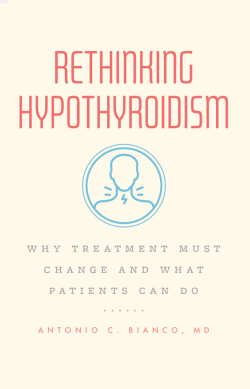
- Rethinking Hypothyroidism
Review: Rethinking Hypothyroidism
Why Treatment Must Change and What Patients Can Do
|
Title: Rethinking Hypothyroidism Author: Dr. Antonio C. Bianco MD, Ph.D Genre: Medical and Health Science Publisher: University of Chicago Press (2022) Pages: 304  |
 |
I did not receive a free copy of this book and I was not asked to review it. It's here because I view it as a useful resource.
If you want to buy it, click the photo or the link to Amazon. I will earn a small commission, at no cost to you.
Who This Book is For
- science curious readers
- thyroid patients
- not for those wanting recipes or home remedies
About Rethinking Hypothyroidism
If you're looking for a book by a true expert on hypothyroidism, you've found it. This book focuses on the medical treatment of hypothyroidism rather than diet-based or alternative approaches.
Dr. Antonio C. Bianco has been a clinician and scientist in the field of thyroid disease for decades. He has held leadership roles including Chief of Endocrinology at both the University of Miami and Rush University, and he served as President of the American Thyroid Association in 2016. Additionally, Dr. Bianco continues to maintain an NIH-funded laboratory where he and his team have contributed extensively to research in hypothyroidism.
 |
Want simple guidance, trusted resources, and doable recipes delivered to your inbox once a week? |
|
Rethinking Hypothyroidism distills decades of research and clinical experience into a single accessible volume. It simultaneously speaks to professionals and patients alike.
Starting from before the turn of the 20th century, we follow the story of the discovery of hypothyroidism through early treatments and how knowledge and treatment have been refined over time.
The book explains what the thyroid is, what it does, and why it’s central to overall health. We also learn the specifics of the primary hormones (TSH, T3 and T4) and the intricately choreographed dance they perform to maintain health or, if steps are missed, contribute to a cascade of uncomfortable and sometimes debilitating symptoms.
While following the twists and turns of the history of thyroid research and treatment, we also learn of the mis-steps. Dr. Bianco humbly admits to participating in a culture in which patients are treated according to TSH hormone levels and not according to their symptoms. As a result, many are left being told they are fine when their bodies are telling them otherwise. Thankfully he saw the light and has spent the remainder of his career listening to his patients and advocating for doctors to take a more nuanced approach to treatment.
My Review
If, like me, you like to understand why things are the way they are; if you enjoy the historical context of a subject and how the past has informed, or mis-informed the present, I think you'll enjoy Rethinking Hypothyroidism.
The book is heavy on the science, so you'll need to tap into your inner nerd to really get into it. For me that's fine. I found myself reading and re-reading certain passages to get a thorough understanding, then highlighting furiously. More importantly, I saw myself in the pages. As someone who has suffered for years with symptoms that I had no idea were related to my thyroid. I'd been told for years that my TSH was near normal so nothing needed to be done. I was relieved and vindicated to read that TSH is not the be all and end all, and that more could be going on.
On an even more personal note, as I was reading this book, I was experiencing recurring thyroid symptoms after months on levothyroxine. I'd felt much better for a time, but little by little I noticed symptoms returning.
The knowledge I gained from reading Rethinking Hypothyroidism gave me the confidence to go back to my doctor for help.
The "What Patients Can Do" section left me a little disappointed at first. I’ve read so much functional and natural medicine that I expected a blueprint for what I could do myself. Instead, the focus is firmly on medication. As I think about it, that's probably best. As much as I'm all about taking responsibility for your own health, and the benefits of a healthy lifestyle, I'm learning that when it comes to my thyroid, working with my doctor is the best and safest approach. I can't do this alone.
Do I Recommend This Book for You?
I gave this book three stars—not because it isn’t excellent, but because it’s not for everyone. If you are really into the history and the chemistry of how certain molecules behave inside the human body, you'll likely love this book. If you're looking for recipes, home remedies or lifestyle advice, you won't not find that here.
|
|
Want simple guidance, trusted resources, and doable recipes delivered to your inbox once a week? |
|

Patty Maguire is a George Brown College culinary graduate whose training focused on nutrition and cooking for special diets.
Since her celiac diagnosis in 2012, she has shared a practical, whole-food approach to naturally gluten-free living that helps readers cook with confidence, eat out safely, travel well, and live fully.
Rooted in farm-family values and simple home cooking, her work has been recognised by Feedspot’s top 10 Canadian gluten-free blogs list.
You might like these
Interesting and Informative Books on Celiac Disease and Healthy Eating
Book reviews and recommendations for books on celiac disease, food, gluten free cooking and living a gluten free lifestyle
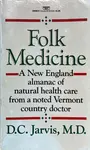
Review: Folk Medicine
Folk Medicine: A New England Almanac of Natural Health from a Noted Vermont Country Doctor D.C Jarvis, M.D.
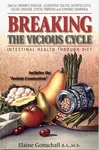
Review: Breaking the Vicious Cycle
Breaking the Vicious Cycle: Intestinal Health through Diet Elaine Gloria Gottschall

Hi, I'm Patty.
I'm a person with celiac disease, a culinary school grad, and a lifelong student of food and natural healing.
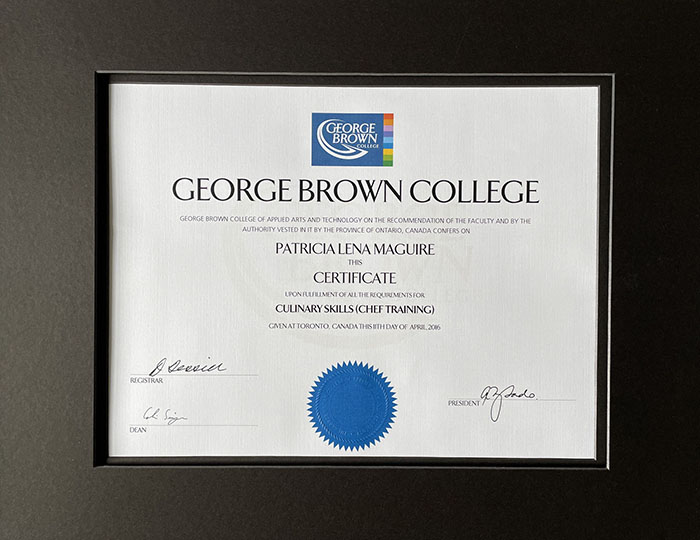
After my diagnosis in 2012, I enrolled in the Chef’s School at George Brown College and earned my Culinary Skills diploma, focusing on nutrition and cooking for special diets.
Cooking has changed my life — and helped me take back my health. Now, I’m here to help you do the same.
Let’s do this together!

Subscribe!
Get Naturally Gluten-Free Digest
Practical gluten-free tips + a featured recipe/article
delivered to your inbox.
Recent Articles


-
How to Prep Ahead, Store and Reheat Gluten-Free Sheet Pan Dinners
Aug 07, 26 01:48 PM
 Learn how to prep gluten-free sheet pan dinners ahead, store leftovers safely and reheat them without drying out. Includes practical tips and a printable guide.
 -
Sheet Pan Cooking Made Easy: Get Everything to Finish at the Same Time
Jul 22, 26 04:14 PM
 Learn how to stagger sheet pan ingredients so everything finishes together. A simple method using timing windows—not complicated minute-by-minute schedules.
 -
Sheet Pan Cook Time Chart for Proteins and Vegetables
Jul 22, 26 04:13 PM
 Compare sheet pan cook times for proteins and vegetables, timing windows and safe internal temperatures. Includes a printable cook time chart.


Popular Articles

Trained in Culinary Skills with a focus on Nutrition and Healthy Eating!
Visit NGF (NaturallyGluten-Free) on Facebook at: https://www.facebook.com/naturallyglutenfree
On Substack at: Naturally Gluten-Free Digest
Patricia Maguire, copyright © 2026 naturallygluten-free.com Port Hope, Ontario, Canada. All rights reserved
Subscribe to
Naturally Gluten-Free Digest
- Feel safer and more confident eating gluten-free
- Save time and money with practical strategies
- Discover trustworthy recipes and resources without wading through misinformation
It's Free!
You won't have to remember to check back.
NGF will land in your inbox weekly.
and
As a thank-you from me you get a free
Printable Gluten-Free Food List
that you can pin to your fridge or take shopping.
I respect your privacy!
I won't use your email for anything but to send you the newsletter.